
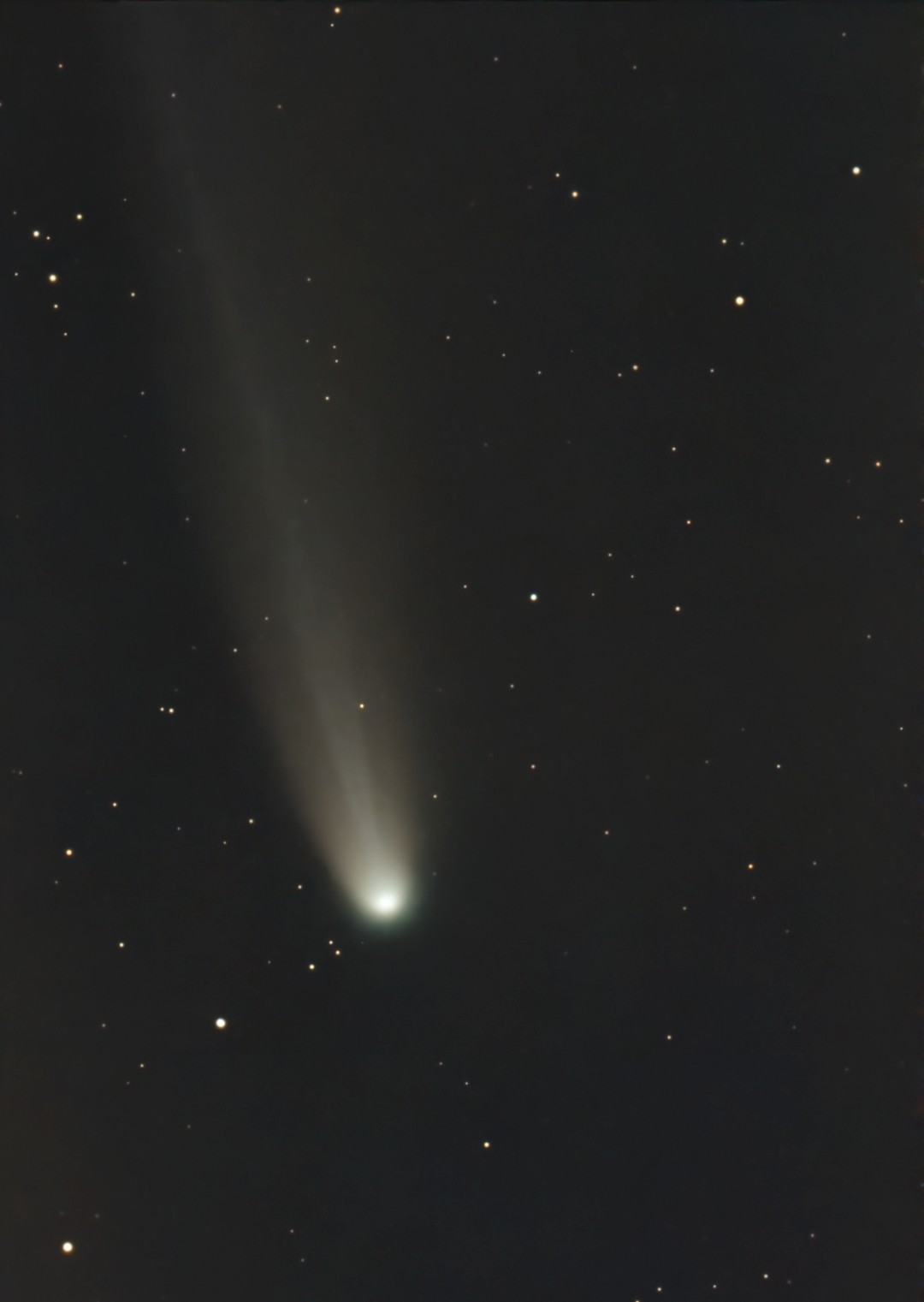
The Lemmon Comet is a fairly recent discovery. It was discovered in January 2025 and has since been an interesting object to observe and image. It was even visible to the naked eye, though this required some darker skies than Belgium has to offer. The long tail is about the length of 6 full moons in the sky. Impressive!
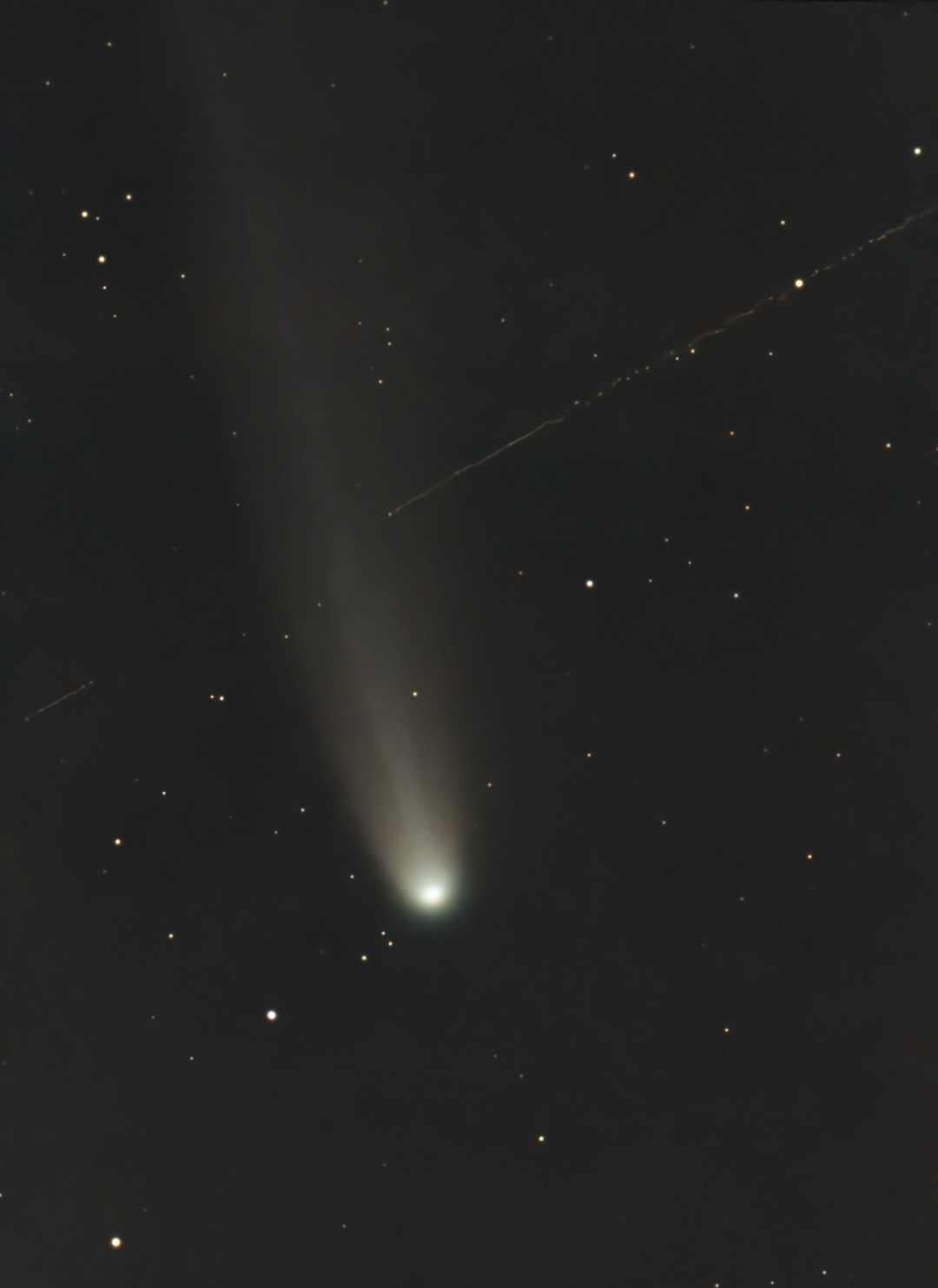
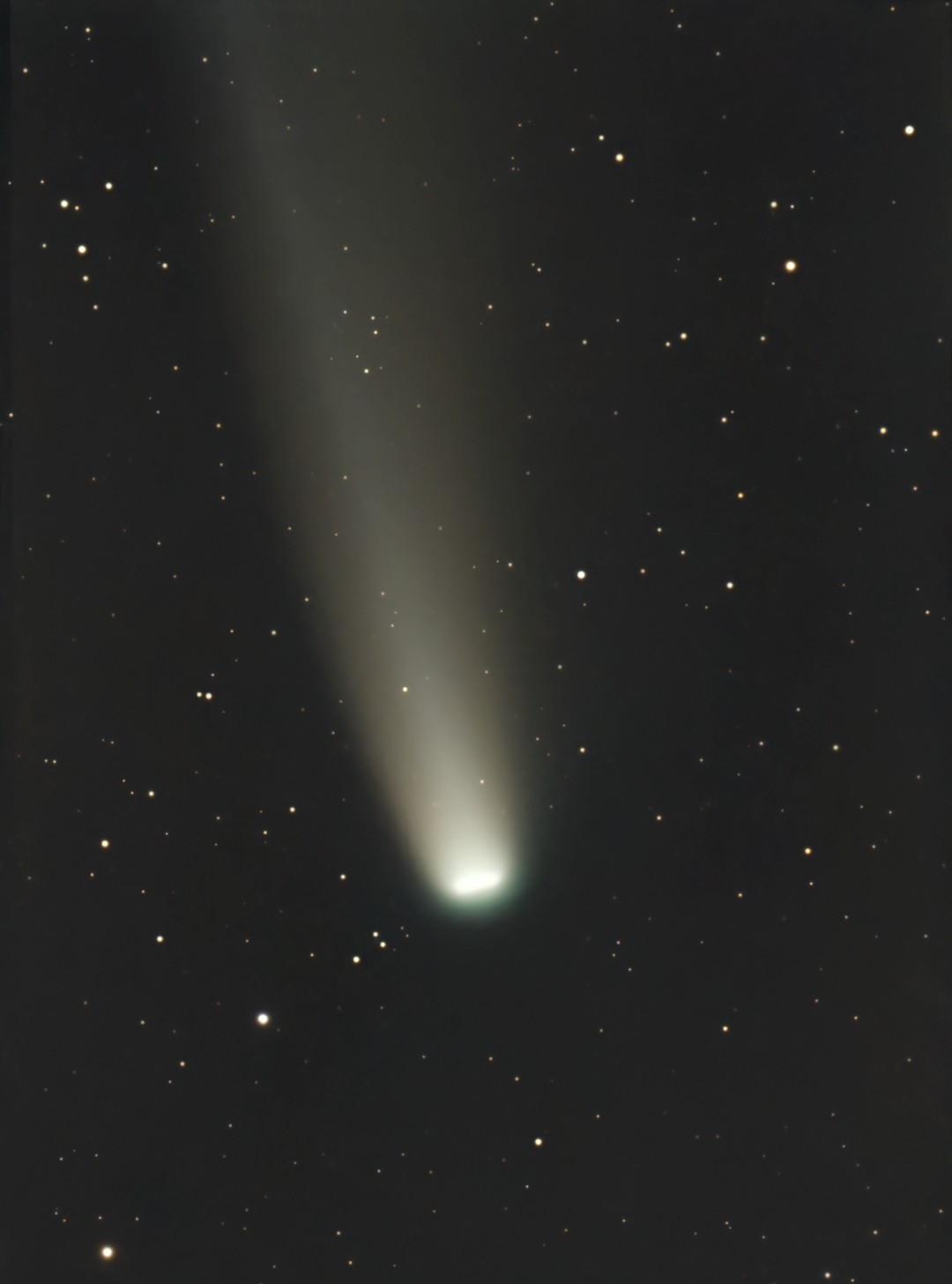
The thing with comets is that the tail is not always visible without enhancement. I have a few pictures that I took with the Seestar S50: the clean version is only about 1 minute of exposure. The wider version is about 15 minutes of exposure. The Seestar S50 uses background stars to keep an object central. Normally this is very effective because the DSO’s that are being targeted are very far away and do not move relative to this reference stars.
Comets are however pretty close to us and move fast. A lot faster than the DSO’s. This means that even though the Seestar can effectively track the background stars, the comet moves relative to these stars. The Seestar software sees that its image is still centered because of the reference stars, but the comet has moved. This causes a widening of the image, as the comet moves from one side to the other.
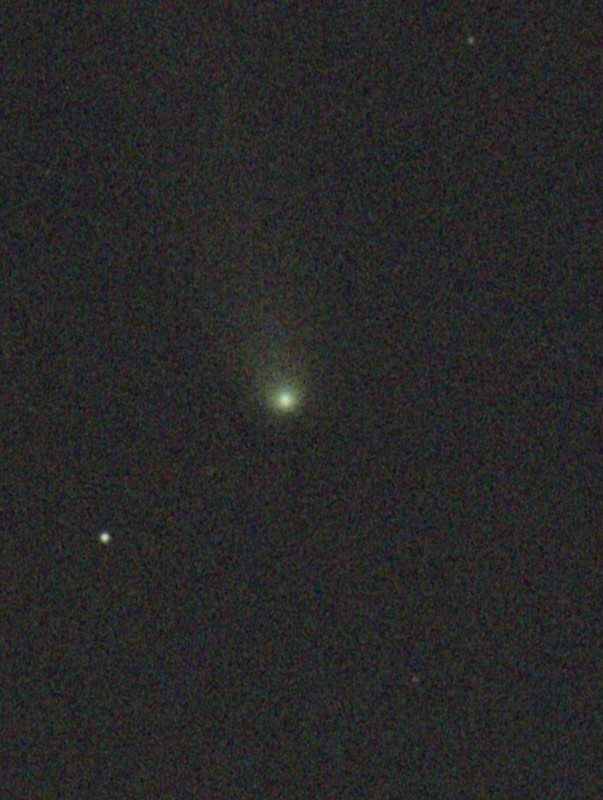
The last picture is a simulation of what I saw when I looked through my visual scope (albeit in poor light conditions).
I’m happy to have been able to find a few hours to observe this once in a lifetime event (the comet has about 1150 years to go before we will see it again) and snap a few pictures!




Leave a Reply